
Central kitchen: equipment for institutional catering
A central kitchen is primarily sized according to the meals produced, the delivery method, the recipes, and the delivery locations. Hubert Cloix manufactures cooking and cooling equipment in France for hospitals, schools, company restaurants, and home delivery services.
What is a central kitchen for institutional catering?
A central kitchen produces meals or preparations in volume for one or more sites, with increased requirements for speed, packaging, traceability and temperature control.
Unlike a kitchen that prepares and serves food on-site, this system organizes production in advance. Meals can be shipped chilled after rapid cooling, or hot with temperature control. The choice of equipment therefore depends as much on the volume as on the number of meals.
| Type of establishment | Typical project volume | Main constraint | Equipment vigilance point |
|---|---|---|---|
| Hospital / clinic | Several hundred to several thousand meals/day | Diets, textures, patient traceability | Repeatability and cold chain |
| Company restaurant / site | A few hundred to over 1,000 meals/day | Peak service and menu variety | Cooking speed and availability |
| School / community | From a few hundred to several thousand meals per day | Multi-site, seasonality, allergens | Large capacity and cooling |
| Home delivery | From a few hundred to several thousand portions per day | Packaging and delivery routes | Cooling and regular dosing |
These volumes are orders of magnitude for the project: the actual sizing must be based on the available recipes, weights and cycles.
Central kitchens of hospitals and clinics
In a hospital setting, the priority is to produce in a repeatable way while controlling diets, modified textures, temperatures and traceability.
The same kitchen may need to prepare soups, sauces, or culinary bases in standard, low-salt, enriched, or textured versions. Convection cooking equipment minimizes variations between operators. In chilled food preparation, the cooling system must be sized to match the cooking system.
Le Pasta cooker for institutional cateringThe mixer chiller and cooling cells are particularly well-suited for liquid or semi-liquid preparations. Temperature control and ease of cleaning facilitate integration into existing HACCP procedures.
The Hospices Civils de Lyon use the Grande Cuisine pastocuiseur for homogeneous preparations in volume, including sauces, soups and culinary bases, with particular attention paid to mixing, scraping and cleaning.
Company restaurants and on-site catering
In corporate catering, the equipment must accommodate a service concentrated over a short time frame while allowing flexibility in menus.
The challenge isn't just the number of covers. You have to prepare multiple dishes, keep to the schedule, and accommodate fluctuations in customer traffic. Programmable equipment reduces the need to monitor long cooking times.
For sauces, soups, creams or stirred preparations, a Custard Cooker It can automate heating, stirring, and cooling. It complements conventional equipment. professional cooking when the recipe requires more regularity or temperature control.
Public and private central kitchens: school
In school catering, the kitchen must combine large volumes, multi-site delivery, allergen management and variation in staff numbers according to the schedule.
The EGAlim regulations also influence menu planning and procurement: institutional catering must incorporate at least 50% sustainable and high-quality products, including at least 20% organic products. Equipment alone does not guarantee compliance, but it must remain versatile enough to accommodate a wider variety of recipes and raw materials.
Large-capacity tanks allow for the centralized storage of soups, sauces, or vegetable-based preparations. Rapid cooling then becomes crucial when the dishes are packaged and shipped to multiple schools.
The central kitchen in Chartres indicates that it operates three pasta cookers to produce, in particular, soups, sauces and vegetable-based preparations in the context of several thousand meals daily.
Home delivery
For home delivery, the priority is to produce, cool, portion and then ship without breaking the cold chain.
The kitchen must take into account portion sizes, trays, specific dietary requirements, and delivery schedules. Undersized cooling slows down the entire line, while inconsistent portioning complicates material costs and portion compliance.
Mixer chillers are suitable for preparations that need to be kept stirred during the cooling process. Cells complement the system for other product categories. Downstream, a water doser or portioning solutions ensure accurate quantities before packaging.
The 3 key positions in a central kitchen
A central kitchen must balance three capacities: cooking sufficiently, cooling at the same rate, then dosing and packaging without slowing down production.
| Post | Equipment | Capacity | What it brings |
|---|---|---|---|
| Cook time | Pastacooker / Large Kitchen Pastacooker | 7 to 240 L; Large Kitchen 60 / 120 / 240 L | Heating, stirring, mixing and cooling in the tank depending on the version |
| Cooling | Mixer cooler + cells | 30/60/120/240 L Cooler | Temperature drop and homogenization of the preparations |
| Dosage / Packaging | Water dispenser and portioning equipment | Size to be determined according to paper weight and speed | Consistency of recipes and portions |
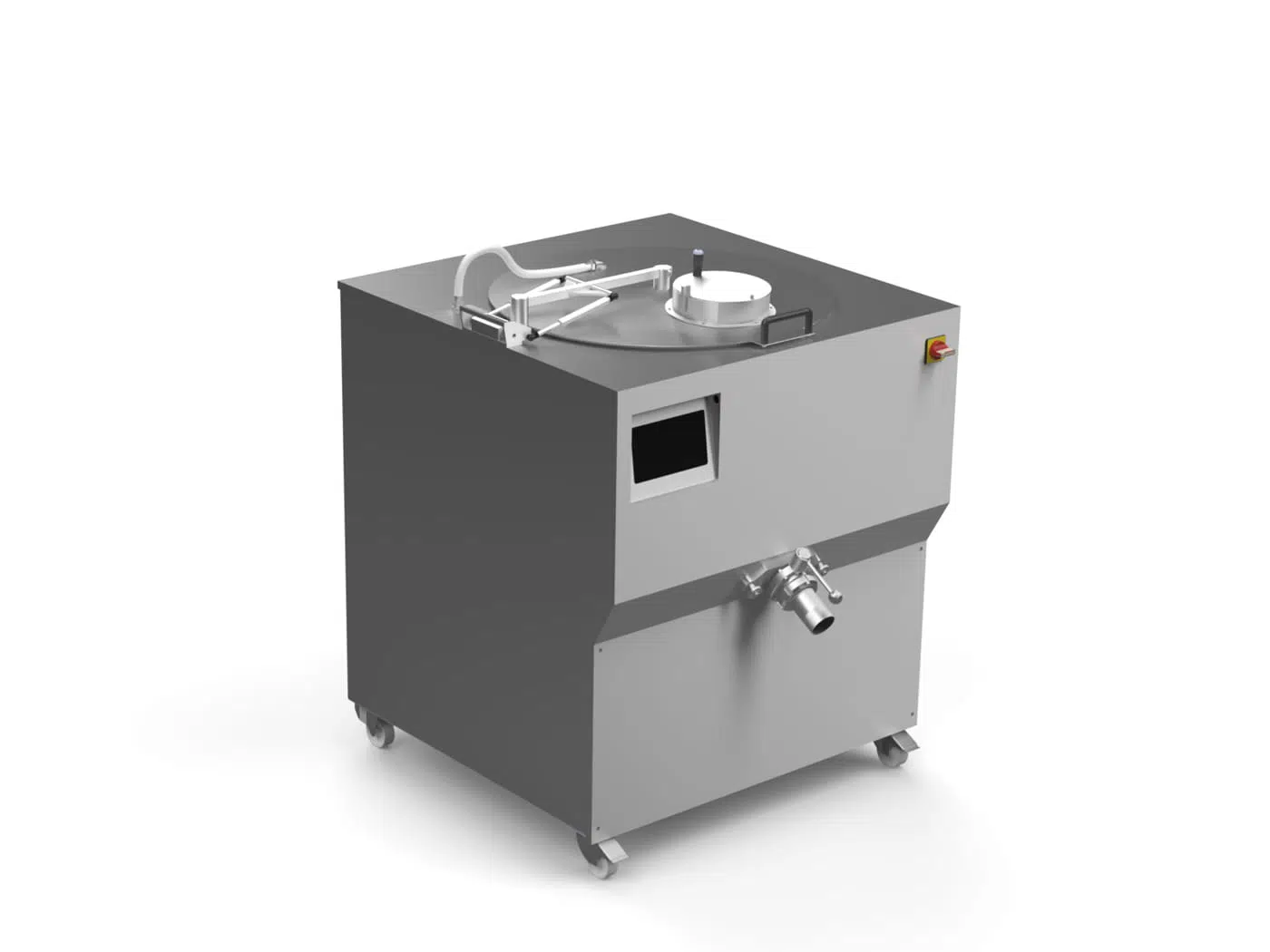
Large Kitchen Pasta Cooker
For soups, sauces, creams, and stirred preparations, the Grande Cuisine version combines cooking, mixing, blending, and cooling. Usable capacities are 59, 119, and 240 liters, with documented standard cycles of approximately 1 hour 40 minutes, 2 hours, and 2 hours 10 minutes for liquid products.
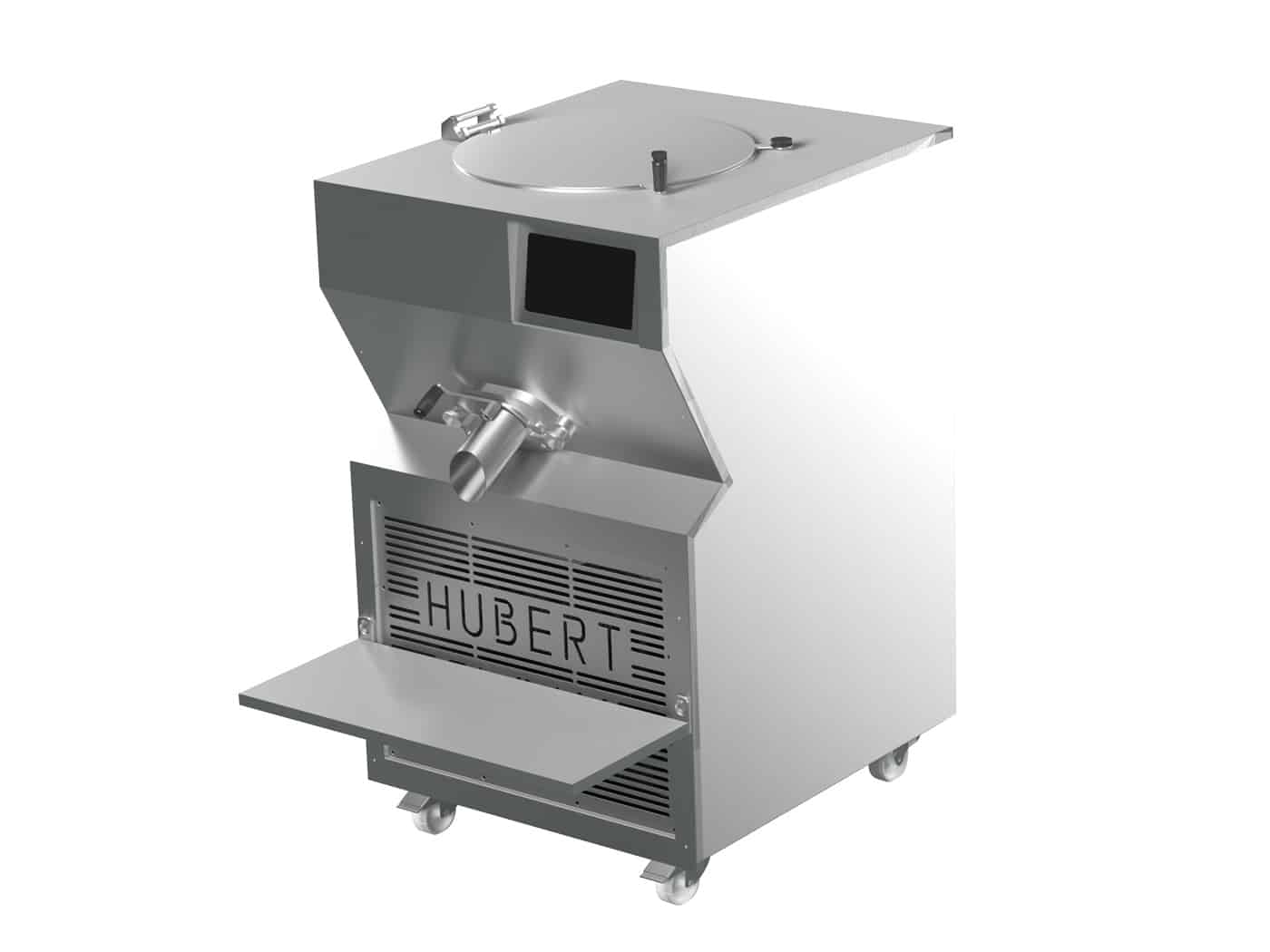
Mixer chiller
Le cooler mixer It is designed for sauces, soups, and already cooked liquid or viscous preparations. The range covers 30 to 240 liters, with standard cycles of approximately 45 to 70 minutes depending on capacity and product.
To choose between traditional equipment and automated processes, consult our comparison. pot, sauté pan or pasta cooker.
See the pasta cooker in operation
Demonstration of the operation of a Hubert Cloix pasta cooker: interface, tank, agitation and the unfolding of a cycle.
Pasta cookers, mixer coolers, dosing units and complementary equipment to structure your cooking and cooling stations.
Pasta cookers, Combi-Ice cream makers and equipment to structure a pastry laboratory.
Discover artisanal pastries → Ice cream parlor Artisanal ice creamPasteurizers, ripening tanks and turbines for producing ice cream and sorbet in the laboratory.
Discover the artisanal ice cream shop → CHR Catering and hospitalityIce cream makers, Combi-Ice machines and turbines for restaurants, brasseries, hotels and caterers.
Discover the restaurant and hotel industry →Frequently asked questions about central kitchens
What equipment is needed to outfit a central kitchen?
The core equipment depends on the production method and the number of meals. For liquid or semi-liquid preparations, the key components are cooking, rapid cooling, and dosing or packaging. A pasta cooker, a chiller/mixer, blast chillers, and dosing equipment are then sized according to the recipes and production rates.
What capacity pasta cooker is needed for 1000 meals per day?
There is no single capacity for 1,000 meals: it all depends on the amount of soup, sauce, or cream produced and the number of cycles available. For large kitchens, 60, 120, and 240-liter tanks allow for sizing based on the actual volume per recipe rather than solely on the number of diners.
Cold chain or hot chain: what equipment?
In chilled food delivery, temperature reduction, storage, and traceability become crucial; therefore, the chiller/mixer and blast chillers play a central role. In hot food delivery, the priority is more on cooking speed, temperature maintenance, and synchronization with service or shipping.
How to automate HACCP in a central kitchen?
Automation involves programmed cycles, reliable temperature control, data logging, and reproducible cleaning procedures. The equipment does not replace the HACCP plan, but it facilitates the repeatability of critical steps and production traceability.
How long does it take to install a central kitchen?
The timeframe depends on the project's scope, the work involved, available power, and the number of machines. For a replacement or the addition of a single piece of equipment, the schedule is much shorter than for a complete installation. Hubert Cloix confirms the manufacturing, delivery, installation, and commissioning times during the planning phase.
Tell us your meals per day, your recipes, your binding methods, and your batch volumes. We will help you size your cooking and cooling stations.