
Louis Pasteur and pasteurization: from wine to artisanal ice cream
A process born from wine diseases in 1865, which has become an essential step in glassmaking laboratories: a look back at the discoveries of Louis Pasteur and their practical applications.
Louis Pasteur did not work on ice: his initial aim was to preserve wine. However, by understanding the role of microorganisms and developing a controlled heating method in 1865, he paved the way for a process that has become central to ice-making laboratories.
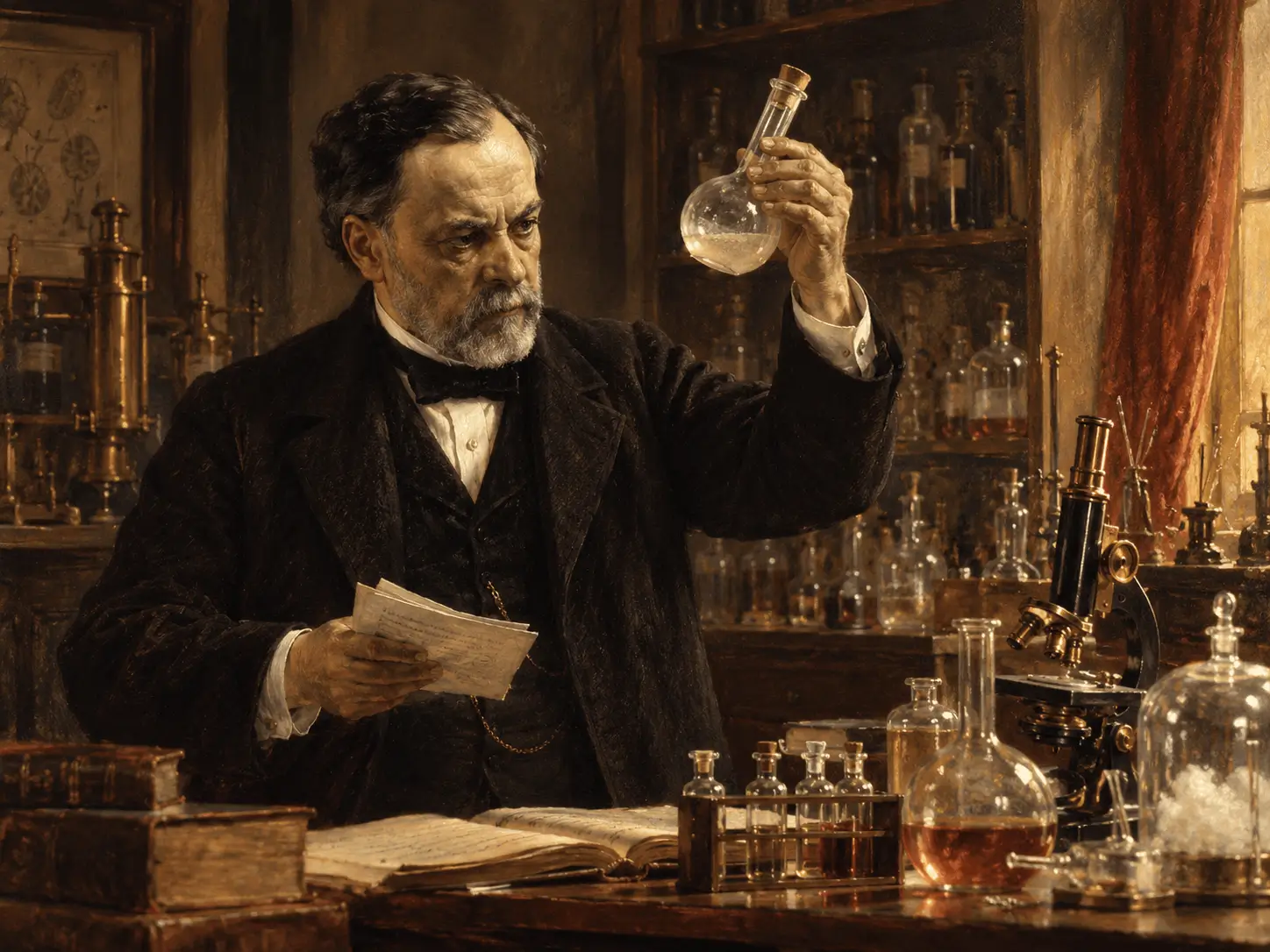
Louis Pasteur, the chemist who saved wine (1822-1895)
Louis Pasteur was born on December 27, 1822, in Dole, in the Jura region of France. Educated at the École Normale Supérieure, he began his career in crystal chemistry before developing a passion for fermentation. His path was that of a researcher who started with observable phenomena to address very concrete problems.
In Lille, he encountered the difficulties faced by beet alcohol producers. Some vats yielded consistent results; others produced an altered liquid. Instead of viewing these irregularities as mere chemical reactions, Pasteur examined the organisms present in the preparations and their conditions of growth.
His research helps to show that fermentation is linked to the activity of living organisms. For producers, this discovery is significant: understanding why a preparation changes means beginning to control the quality from one batch to the next.
Why is wine becoming a national issue?
In the mid-19th century, French wines represented a leading agricultural, commercial, and social activity. Their deterioration during storage or transport resulted in significant losses. Wine was not only associated with prestige; it was a beverage deeply embedded in daily life and a product that had to travel without spoiling.
In 1863, Napoleon III commissioned Pasteur to investigate the causes of wine diseases and how to prevent them. The scientist worked primarily in Arbois, in the Jura region, close to the vineyards. He linked the observed spoilage to the presence of undesirable microorganisms.
His approach changed the scale of the issue. Previously, the focus was primarily on masking or avoiding defects through practice. Pasteur proposed understanding their origin, then controlling the phenomenon with a reproducible method.
A legacy that extends far beyond chemistry
The same reasoning would later guide research on silkworm diseases, microbes, and vaccines. But pasteurization remains a particularly clear example of the intersection between science and production processes.
To understand how preservation techniques intersected with the production of frozen desserts, we can extend this story with that of history of the ice cream makerThe two stories follow a common idea: improving the consistency of a product without losing what makes it good.
1862–1865: Fermentation, wine, and the birth of pasteurization
Pasteurization arose from the study of fermentation and wine diseases. Pasteur distinguished between organisms useful for fermentation and those that cause spoilage, then sought a way to limit the latter without unnecessarily altering the beverage.
Fermentation, microbes, and spontaneous generation
At the time, explanations for fermentation were debated. The chemist Justus von Liebig defended an essentially chemical interpretation; Pasteur, on the contrary, insisted on the role of living organisms. His experiments on germs and spontaneous generation advanced a microbiological view of food transformations.
This distinction still matters in the workshop. Fermentation is not necessarily spoilage: some yeasts do the desired work, while other organisms degrade the product. The pasteurization process aims to reduce targeted microbial populations through appropriate heat treatment.
Controlled heating and the 1865 patent
Pasteur demonstrated that moderately heating wine, under carefully defined conditions, could reduce spoilage. Historical reports from the Pasteur Institute mention trials at around 55 to 60 °C, while the patent of April 11, 1865, more broadly describes a preservation method using heating.
The goal is not to systematically boil the wine. The aim is to achieve a measurable microbiological effect without unnecessarily sacrificing sensory qualities. Duration, temperature, packaging, and the nature of the product are all part of the method.
La high pressure pasteurization and the cold pasteurization These are now distinct subjects that reflect the diversification of preservation technologies. They should not be confused with the moderate heating studied by Pasteur in the 19th century.
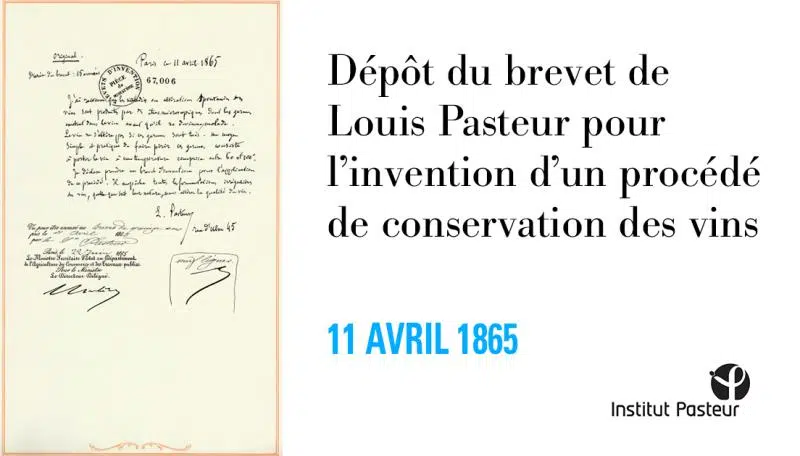
"Wine won't spoil if the microbes are killed beforehand."
Louis Pasteur, text of the patent cited by the Pasteur Institute, 1865.
Three historical temperature benchmarks
| Product | Thermal reference | The goal |
|---|---|---|
| Wine | 55–60 °C in the tests described | Limit the microorganisms responsible for spoilage |
| Beer | Approximately 55°C in the historical works cited | Preventing certain alterations |
| Milk | 63°C for 30 minutes: example of low-temperature treatment | Reduce pathogenic germs according to a defined protocol |
From vine to plate: pasteurization in the agri-food industry
Pasteurization has gradually been extended to other foods and beverages. The principle remains the same: to apply a treatment compatible with the product in order to control certain microbiological risks and extend its shelf life under appropriate conditions.
From wine to milk: two products, two constraints
For wine, Pasteur sought to prevent spoilage caused by microorganisms that compromise preservation. The organoleptic aspect is crucial: excessively altering the wine's bouquet would solve one problem by creating another.
Milk presents a different health problem. It is perishable and can be a vector for pathogenic microorganisms. Milk pasteurization processes have therefore been developed and regulated with appropriate time-temperature combinations, taking into account cooling, packaging, and the cold chain.
Beer and fermented beverages
Brewers also seek to limit spoilage during storage and distribution. Pasteur's work on beer linked contamination to organisms present in the environment and led to improved process control.
Fermented beverages contain microbial life, sometimes desirable during production, but problematic when it continues its activity at the wrong time. Stabilization treatment is applied at a carefully chosen stage and must remain compatible with the desired taste.
Pasteurization, sterilization and canning
Canned food processing does not serve the same purpose as pasteurization: the treatment and packaging conditions aim for much longer shelf life, sometimes even at room temperature. Equating these techniques leads to errors in terminology, but also to poor storage decisions.
Similarly, low-temperature pasteurization uses a different combination of temperature and duration than some faster, higher-temperature treatments. The choice depends in particular on viscosity, packaging, and the expected microbiological outcome.
Industrial adoption took decades, as it was necessary to design equipment capable of reproducibly measuring, heating, maintaining, and then cooling. It was also essential to control post-processing contamination: a well-designed process can be compromised by subsequent handling.
To delve deeper into the issues of quality and organization, see our dossier on...importance of pasteurization in industry presents modern applications. On a larger scale, a pasteurization line allows for the processing of continuous flows with a different organization than that of a laboratory working in tanks.
And what about the ice cream? What pasteurization changes in an artisanal ice cream shop.
In artisanal ice cream making, pasteurizing a mix allows for control of a critical step before churning. The process contributes to food safety and consistent production, but it never replaces the importance of high-quality ingredients, proper cleaning, or maintaining the cold chain.
Why heat-treat an ice cream mix?
A mix combines several ingredients: milk or other liquid bases, fats, sugars, stabilizers, and sometimes flavorings. Their combination alters the physical properties of the recipe. Heating, stirring, and cooling each play a role in the final result.
The heat treatment aims to reduce the microorganisms involved in the process. At the same time, depending on the formulation, heat can facilitate the dissolution, dispersion, and hydration of certain ingredients. However, these technological effects should not be confused with an automatic guarantee of texture.
The final texture also depends on the balance of the recipe, any maturation process, the churning conditions, and storage. Proper pasteurization is part of a coherent manufacturing process; it does not eliminate variations in formulation.
A cycle seen from the laboratory
The operator begins by preparing and weighing the ingredients for their recipe. They then place the mix into a suitable tank, program the cycle specified in their procedure, and monitor the temperature rise. Depending on the machine, stirring accompanies the heating phases to promote homogeneity.
Next comes maintaining the defined temperature for the duration required by the recipe and the validated process. Rapid cooling is an essential step: the mix must pass correctly through the critical temperature ranges and then be stored according to the applicable rules.
We emphasize one point during discussions with ice cream makers: the values from one cycle cannot be copied from one recipe to another. Composition, quantity loaded, machine, and hygiene requirements can all alter the relevant parameters. The instruction manual and the establishment's food safety plan are the reference documents.

Producing in advance without losing consistency
A well-managed production cycle facilitates the organization of batch production. Ice cream makers can better anticipate their needs, plan flavors, and distribute machine usage throughout the day. This organizational advantage is also beneficial for laboratories whose demand fluctuates significantly with the seasons.
The shelf life of the mix, however, remains dependent on its validated process, temperature, packaging, and current health regulations. It would be misleading to promise the same shelf life for all recipes simply because they are pasteurized.
This mastery of preparation takes on its full meaning when combined with good formulation. Our guide to making ice cream explains in particular the role of ingredients, the aeration and the balance of recipes.
Ice pasteurizer or pasteurizer?
An ice cream pasteurizer is designed to heat-treat the mix before ice cream production. A pasteurizer is more broadly suited to preparations requiring both cooking and mixing, particularly in pastry making. The choice depends on the recipes, capacity, and desired versatility.
Our range of pasta cookers They thus respond to applications different from those of an installation exclusively dedicated to ice cream. Pasteurizer vs. Pasteurizer Comparison allows us to examine uses without assuming that one machine systematically replaces another.

A laboratory project is not simply a technical specification sheet. The organization of the artisanal ice-cream parlor It also depends on production flows, machine location and team habits: all points to study beforehand.
From Pasteur's kettle to 240-liter vats: the evolution of equipment
Between Pasteur's experiments and modern machines, the thermal principle has persisted, but the means of reproducing it have changed profoundly. Measurement, regulation, agitation, and cooling have become functions integrated into equipment designed for regular use.
Yesterday: observe, heat and control by hand
In the 19th century, controlling a treatment relied on heating and measurement methods that required careful attention. Maintaining the correct temperature, preventing local overheating, and cooling the product presented practical challenges, particularly when volumes increased.
These constraints explain why the dissemination of the process required more than a scientific discovery. It was necessary to build equipment, improve instruments, train operators, and adapt methods to very different products.
Today: more reproducible cycles
Modern professional equipment allows for the programming or regulation of several phases of the process, depending on its functions. The objective is to reduce variations in execution and facilitate the repetition of a cycle from one production run to the next, within the limits set by the recipe and procedure.
Controlling the cooling is just as important as controlling the heating. An incorrectly sized system, an inadequate product load, or insufficient maintenance can compromise expected performance, even when temperature regulation is precise.
To lay the technical groundwork, our introduction to the pasteurizer details the role of this type of equipment. Our range of pasteurizers then illustrates the proposed configurations according to professional needs.
| Criterion | 19th Century Practices | Current professional tank |
|---|---|---|
| Control | Manual observation and measurement | Electronic regulation according to the model |
| Capacity | Varies depending on the container | Hubert Cloix ranges from 7 to 240 liters depending on the family |
| Cooling | Separate devices or empirical methods | Features integrated into the models concerned |
| Repeatability | Strong dependence on the operator | Customizable cycles and easy controls |
Hubert Cloix: French manufacturing since 1973
Since 1973, Hubert Cloix has been designing and manufacturing equipment in France for professionals in the pastry, ice cream, and catering industries. In Lognes, the workshop and design office work closely together, particularly to develop equipment and analyze technical adaptations.
Our tank families cover capacities from 7 to 240 liters, depending on the machine. This does not mean that a particular turbine or pasteurizer is available in all these capacities: each range must be consulted separately.
The company is a member of the French Fab. But for professionals, the most useful proof remains the experience of the equipment in operation: its ease of use, its maintenance possibilities and the working relationship with the technical teams.
La history and evolution of the ice pasteurizer shows how the tool has evolved. The page dedicated to ice cream pasteurizer presents the uses of this family of machines and the questions to ask before choosing equipment.
Frequently Asked Questions about Louis Pasteur and Pasteurization
These answers address the most frequently asked questions about the discovery, the process, and its application to ice cream making.
What is pasteurization?
Pasteurization is a controlled heat treatment designed to reduce certain microorganisms present in a product. It combines a temperature and duration tailored to the product, followed generally by cooling and controlled storage conditions. It improves microbiological stability, but does not necessarily render the product sterile.
Who invented pasteurization?
In the 19th century, Louis Pasteur established a scientific method for preserving wine through controlled heating and filed a patent in 1865. Practices for heating food existed previously, notably the work of Nicolas Appert on preserves. Pasteur's contribution also lies in explaining the role of microorganisms.
Why did Louis Pasteur work on wine?
French wines were suffering from spoilage that hampered their preservation and trade. In 1863, Napoleon III commissioned Pasteur to investigate the causes and methods of prevention. His observations linked these defects to microorganisms, paving the way for the process patented in 1865.
Does pasteurization destroy the taste?
Appropriate processing aims to minimize microbiological alterations while preserving sensory qualities. This does not mean that pasteurization is ineffective on all products: excessive temperature or an incorrect time-temperature combination can alter taste, texture, or aroma. The process must be adjusted for the specific preparation.
Pasteurization and sterilization, what's the difference?
Pasteurization reduces certain microbial populations without necessarily eliminating all forms of microbial life. Sterilization pursues a more advanced objective, using a thermal or other process tailored to the product and its packaging. Storage requirements can therefore differ considerably; a pasteurized preparation is not automatically safe to store at room temperature.
Why is ice cream mix pasteurized?
Heat treatment of the mix helps control microbiological risks before churning. Depending on the recipe, it can also facilitate the dissolution or hydration of certain ingredients. However, the texture and shelf life depend on the overall process, the formulation, hygiene, and adherence to storage temperatures.
What is the difference between an ice cream pasteurizer and a pasteurizer?
The ice cream pasteurizer is designed for the heat treatment of the mix used in ice cream production. The pasteurizer performs cooking and mixing operations for a variety of preparations, particularly pastries. The choice of equipment depends on the recipes, production capacity, and the features actually available on the model in question.
Is pasteurization mandatory in artisanal ice cream making?
Sanitary requirements depend in particular on the products manufactured, the raw materials, the processes used, and the regulatory framework applicable to the establishment. It would be inaccurate to claim that the same pasteurization cycle is always mandatory for all artisanal ice creams. The producer must define and justify appropriate food safety control measures with the relevant authorities.
Sources and references
The dates and historical information on this page are based on the following archives and scientific publications. Modern manufacturing parameters are presented for educational purposes and do not replace machine manuals or validated sanitary procedures.
- Pasteur Institute — Louis Pasteur: a universal legacy
- Pasteur Institute — Second period: 1862–1877
- Chemical Society of France — Louis Pasteur (1822–1895)
- Pasteur Institute — Pasteurization is 150 years old (2015), with reproduction of the patent
- Louis Pasteur — Studies on Wine (1866), Gallica / National Library of France
Let's discuss your recipes, desired volumes, and the sizing of your equipment.